Types of Group Fitness Classes: Which One Suits You?
Compare spin, HIIT, Pilates, yoga, Zumba, barre, aqua aerobics and circuit classes: what each involves, effort, joint impact and how to pick a first class.
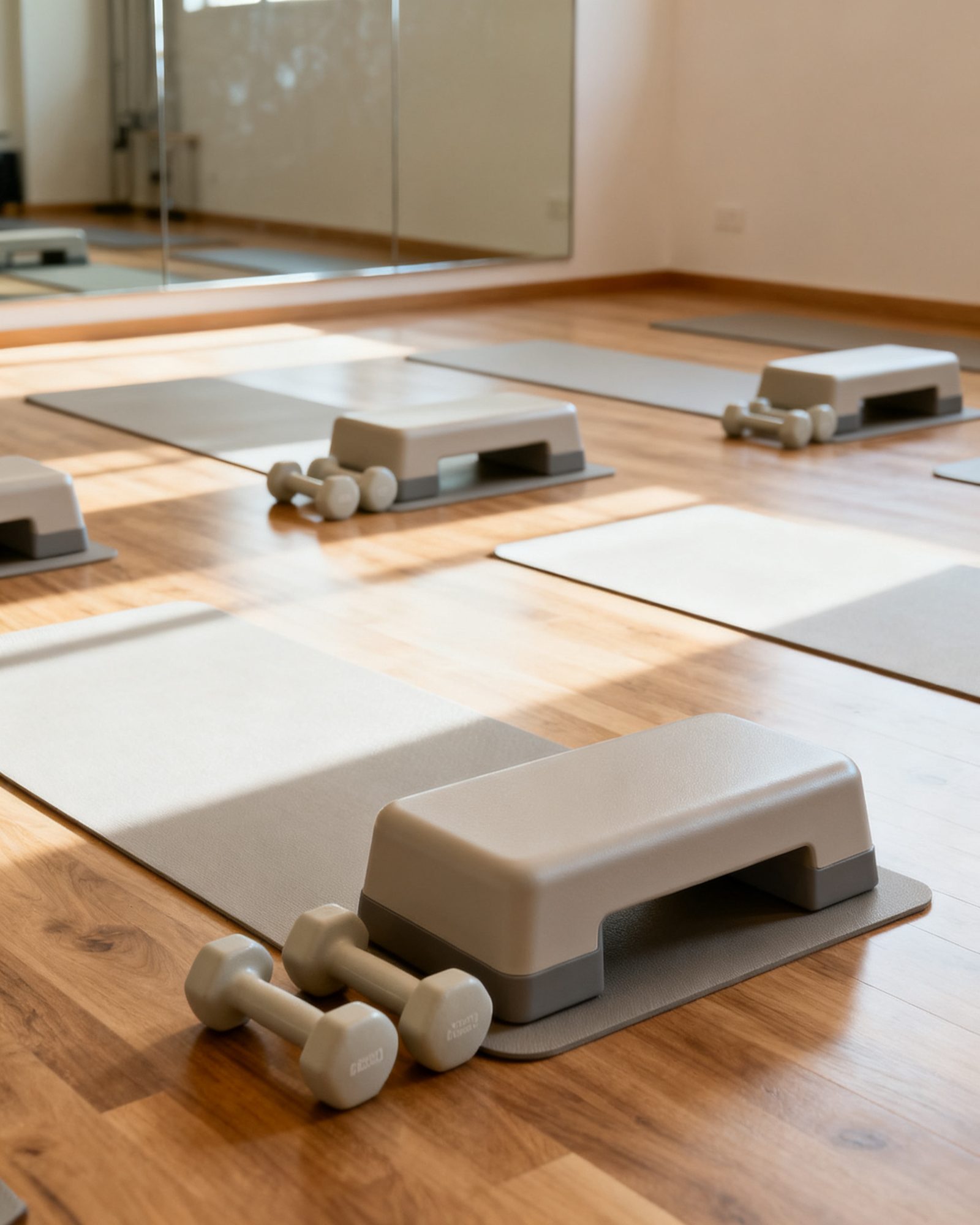
Group fitness classes are instructor-led sessions where a room full of people exercise together to music or cues. The main types differ in effort, impact on the joints and what you need to know before your first one. This guide explains each common class in plain terms, so you can choose one that matches your experience and what you enjoy.
The main types of group fitness classes at a glance
| Class | What it is | Effort | Joint impact | Suits |
|---|---|---|---|---|
| Spin (indoor cycling) | Stationary bikes, resistance control, instructor-led to music | Moderate to vigorous, depending on your pace and resistance | Low impact | Beginners who want a seated, low-impact workout; anyone who likes music and a group push |
| HIIT | Short periods of hard effort alternated with rest or easy movement | Vigorous | Varies; many moves can be low impact if you choose | People with a base of regular moderate activity who want short, demanding sessions |
| Pilates | Controlled exercises for deep abdominal and back muscles, posture, breathing and control | Light to moderate, depending on the class | Low impact | Beginners, people who want to build core control and posture |
| Yoga | Postures, breathing and relaxation; styles range from slow to flowing to hot | Light to moderate, varies by style | Low impact | Beginners (hatha is often a good start), people who want mobility and calm |
| Zumba and dance fitness | Dance moves to Latin and international music | Moderate to vigorous | Moderate; can be low impact with smaller steps | People who enjoy music and dancing; no dance experience needed |
| Barre | Ballet barre for support, small controlled movements, light weights and bodyweight | Moderate | Low impact | Beginners who want a focused, controlled class |
| Aqua aerobics | Exercise to music in waist- or chest-deep water, often with foam equipment | Moderate | Low impact; water supports part of body weight | Beginners, older adults, anyone who prefers water |
| Circuit training | Moving through a series of exercise stations with short rests | Moderate to vigorous | Varies by station | People who like variety and a clear structure |
| Step | Choreographed stepping on a raised platform | Moderate to vigorous | Moderate to higher impact; height and moves can be adjusted | People who enjoy choreography and music |
Effort levels follow the CDC and NHS descriptions: moderate means breathing faster and heart beating faster, and you can talk but not sing; vigorous means breathing hard and fast, and you cannot say more than a few words without pausing for a breath. The same class can feel moderate to one person and vigorous to another.
How to choose a first class
Start with what you want from the session and what your body is used to. If you have been mostly sitting, a low-impact class such as aqua aerobics, Pilates, yoga or a beginner spin class is a gentle way in. If you already walk briskly or cycle regularly, a dance fitness or circuit class may feel manageable.
Look for classes labeled beginner or all levels. Instructors in these classes expect people who are new and usually explain the moves and offer easier options. Ask at the front desk which classes are aimed at beginners, and whether you can watch part of a class before joining.
Consider the time and the day. A class you can reach without rushing is more likely to become a habit. The US Physical Activity Guidelines say some activity is better than none, and activity of any length counts toward the weekly total, so a shorter class that fits your day is a good choice.
Matching the class to your starting point
- New to exercise or returning after a long break: aqua aerobics, beginner yoga (hatha), Pilates, or a beginner spin class.
- Want low impact on the joints: spin, aqua aerobics, Pilates, barre, or a low-impact dance fitness class.
- Enjoy music and moving to a beat: Zumba or dance fitness, spin, step.
- Want structure and variety: circuit training.
- Want a demanding session and already active: HIIT, but build a base of regular moderate activity first.
What happens in a typical class
Most classes follow a pattern: a warm-up, the main work, and a cool-down. ACSM recommends warming up for at least 5 to 10 minutes at light to moderate intensity and cooling down for at least 5 to 10 minutes afterwards. Instructors usually build this into the class.
In a spin class, you set up your bike, then ride to the instructor’s cues, adjusting your own resistance and pace. The saddle should be set so the knee keeps a slight bend at the bottom of the pedal stroke. For a full walk-through, see spin class for beginners.
In a HIIT class, you alternate short periods of hard effort with rest or easy movement. It is demanding, so beginners should build a base of regular moderate activity first and can take every move at a lower intensity. More detail is in HIIT for beginners.
Pilates focuses on controlled movement, breathing and posture. Mat Pilates uses a mat; reformer Pilates uses a spring-loaded sliding machine. Read Pilates for beginners for the differences.
Yoga combines postures, breathing and relaxation. Hatha is often slower and good for beginners; vinyasa links movement to breath; yin and restorative use long, passive holds; hot yoga takes place in a heated room. See yoga for beginners for styles and what to bring.
Zumba is a trademarked dance-fitness programme using Latin and international music. Other dance fitness classes work the same way, and no dance experience is needed. Zumba and dance fitness classes for beginners explains what to expect.
Barre uses a ballet barre for support, with small controlled movements, light weights and bodyweight exercises. Barre class for beginners covers the basics.
Aqua aerobics is exercise to music in waist- or chest-deep water, often with foam equipment. Water supports part of the body’s weight, which reduces the load on the joints, and its resistance makes movement work the muscles. See aqua aerobics for more.
Circuit training moves through a series of exercise stations with short rests. Step classes use a raised platform and choreographed moves; you can lower the platform or take smaller steps to make it easier.
Telling the instructor you are new
Arrive a few minutes early and introduce yourself. Say it is your first class and mention anything the instructor should know, such as an injury or a health condition. Ask which moves to modify if you need to. Instructors are used to beginners and can offer easier versions of most exercises.
If you have a known heart, metabolic or kidney condition, symptoms such as chest pain, unusual breathlessness or dizziness, or you are pregnant, injured or unsure, talk to a doctor before starting a new exercise programme. Questionnaires such as the PAR-Q+ help people decide whether to check with a doctor first. This site gives no medical advice.
What to bring and how to prepare
- Water: drink before and during the class.
- Clothing you can move in: comfortable layers; for yoga, something you can stretch in.
- Footwear: supportive shoes for most classes; yoga and Pilates are often done barefoot or in socks.
- A towel: useful for any class where you work up a sweat.
- A mat: some studios provide them; ask if you need to bring your own for yoga or Pilates.
- For aqua aerobics: swimwear and a towel; equipment is usually provided.
Arrive early enough to set up and ask questions.
How to make a class easier or harder
Most classes offer options. To make it easier, reduce the range of motion, lower the resistance or platform height, take smaller steps, or use bodyweight instead of weights. To make it harder, increase resistance or range of motion, add light weights where offered, or pick up the pace within the instructor’s guidance.
In strength-based classes, ACSM suggests 8 to 12 repetitions per set improve strength in most adults, and 10 to 15 repetitions at a lighter effort suit older or previously inactive people who are starting out. A single set of each exercise can be effective for beginners. ACSM’s general advice for gym strength work is to rest about 2 to 3 minutes between sets; classes usually move faster, so take an extra breather or the easier option whenever you need it.
For aerobic classes, the US Physical Activity Guidelines recommend at least 150 to 300 minutes a week of moderate-intensity activity, or 75 to 150 minutes a week of vigorous activity, or a combination. One way to reach 150 minutes is 30 minutes a day, 5 days a week. Classes can count toward this total.
What goes wrong and how to avoid it
Going too hard in the first class. Beginners often try to match the instructor or the fittest person in the room. Start below your limit and increase gradually; inactive people should begin with lighter activity and build up over weeks and months. Take the easier option and see how you feel the next day.
Ignoring pain. Muscle soreness after unfamiliar exercise is normal and usually begins 12 to 24 hours later, often worst 24 to 72 hours afterwards, then eases. Sharp or sudden pain, pain in a joint, swelling, or pain that does not ease is not normal soreness: stop and talk to a doctor or physiotherapist.
Skipping the warm-up or cool-down. Arrive on time so you do not miss the warm-up, and stay for the cool-down. Both are part of the session and help you move well.
Holding your breath. In strength work, breathe out during the effort and in during the return; do not hold your breath while lifting.
Not telling the instructor about an injury. If you have an injury or a health condition, tell the instructor before class so they can suggest alternatives. If you are unsure whether exercise is right for you, ask your doctor first.
Expecting too much too soon. The guidelines describe regular physical activity as one of the most important things people can do for their health. In the short term it can help people feel better, sleep better and reduce feelings of anxiety; over time it improves physical function and fitness. Progress comes with consistency, not with one hard class.
Warning signs to stop: chest pain or pressure, fainting, severe breathlessness or dizziness. Stop exercising and seek medical help if any of these occur.
Building a weekly routine with classes
Adults should do muscle-strengthening activities that work all major muscle groups on 2 or more days a week, alongside aerobic activity. Classes such as Pilates, barre and circuit training include strength work; spin, dance fitness and aqua aerobics are mainly aerobic. A mix across the week covers both.
The NHS suggests spreading exercise evenly over 4 to 5 days a week or every day, and reducing time spent sitting. Older adults should also do multicomponent activity that includes balance training, as well as aerobic and muscle-strengthening activity; if they cannot meet the full guideline because of a chronic condition, they should be as active as their abilities and condition allow.
Try a few class types and notice which ones leave you feeling good and which you look forward to. Enjoyment is a practical reason to return.
Common questions
What types of group fitness classes are best for beginners?
Low-impact classes such as aqua aerobics, beginner yoga (hatha), Pilates, barre and beginner spin are good starting points. Look for classes labeled beginner or all levels, and tell the instructor it is your first time so they can offer easier options.
Which gym class should I take if I am new to exercise?
Start with a class that matches what you enjoy and your current activity level. If you have been mostly sitting, choose a low-impact class and take the easier options. If you already walk briskly or cycle regularly, a dance fitness or circuit class may suit you.
Do I need to be fit to join a group fitness class?
No. Many classes are designed for all levels and instructors offer modifications. Start below your limit and increase gradually over weeks and months. The US Physical Activity Guidelines say some activity is better than none.
What should I bring to my first fitness class?
Bring water, comfortable clothing you can move in, supportive shoes for most classes, and a towel. For yoga or Pilates, ask whether mats are provided. For aqua aerobics, bring swimwear and a towel.
How do I know if a class is too hard?
If you cannot speak more than a few words without pausing for a breath, you are working vigorously; that may be fine for short periods but not for the whole class if you are new. Stop and seek medical help for chest pain, fainting, severe breathlessness or dizziness.
Read next
Barre Class for Beginners: What to Expect
What a barre class is really like, from warm-up to mat work and the shake. Learn how barre compares to Pilates and yoga, and how to prepare for your first class.
HIIT for Beginners: What a High-Intensity Class Involves
What HIIT is, what happens in a beginner class, how hard to push, how to make moves low impact, and how to fit HIIT into a safe week.
Pilates for Beginners: Mat vs Reformer and What a Class Is Like
New to Pilates? Compare mat and reformer classes, learn the core principles and common beginner exercises, and find out what a first class is really like.