HIIT for Beginners: What a High-Intensity Class Involves
What HIIT is, what happens in a beginner class, how hard to push, how to make moves low impact, and how to fit HIIT into a safe week.
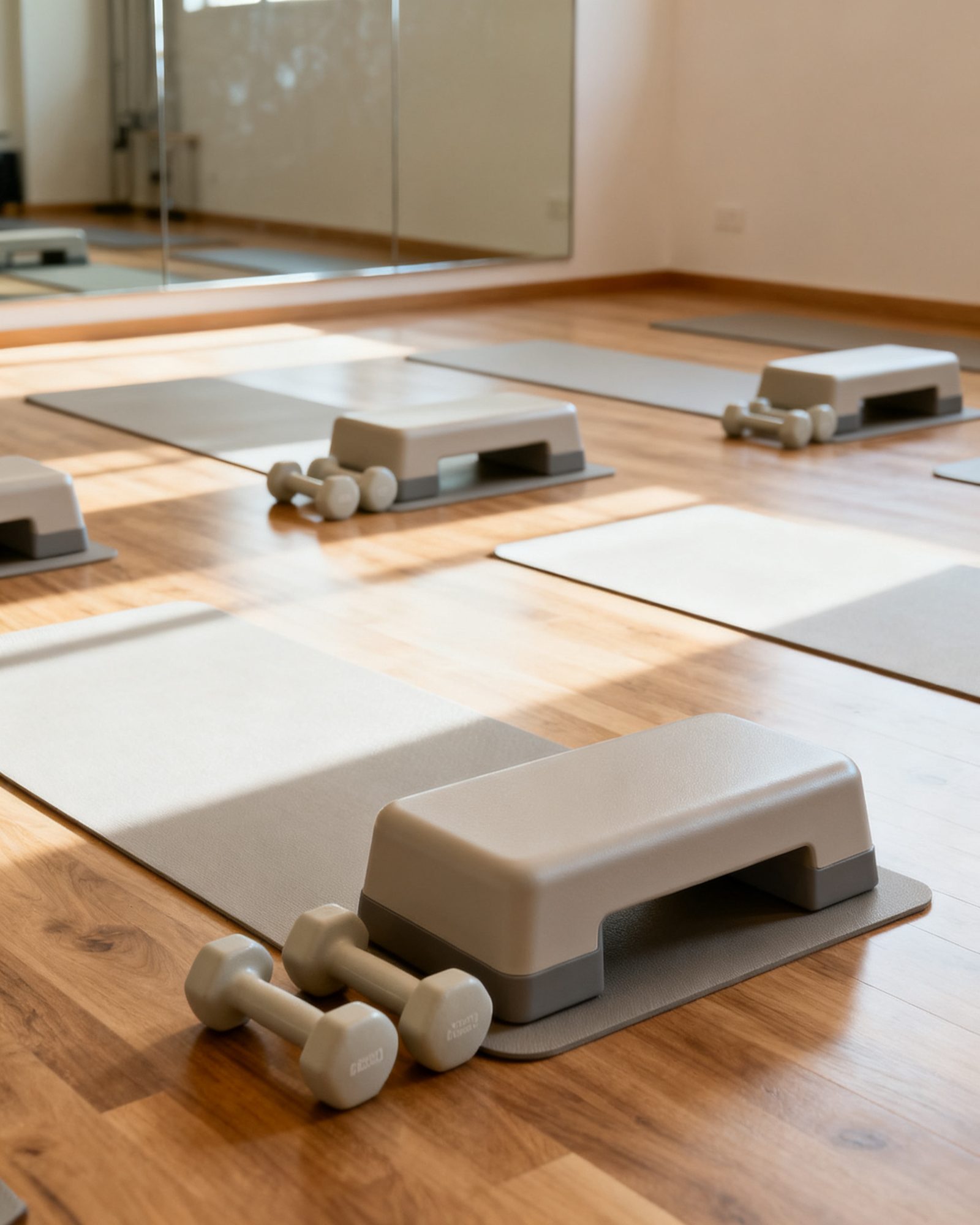
HIIT stands for high-intensity interval training: short periods of hard effort alternated with periods of rest or easy movement. In a class, an instructor leads the group through a series of work intervals and recovery intervals, usually to music, and shows an easier version of each move. It is demanding by design, so beginners are usually advised to build a base of regular moderate activity first and to take every move at a lower intensity while learning the format.
What a HIIT class actually looks like
A typical session follows a pattern rather than a fixed routine:
- Warm-up. At least 5 to 10 minutes at light to moderate intensity, so breathing and heart rate rise gradually.
- Work intervals. Short bursts of hard effort. The instructor calls the time and demonstrates the move; everyone works at their own level.
- Recovery intervals. Rest or easy movement between the hard efforts. These are part of the training, not a break from it.
- Cool-down. At least 5 to 10 minutes at easy effort, often with some stretching while the muscles are warm.
Moves are often bodyweight exercises such as squats, lunges, push-ups (including on the knees or against a wall), glute bridges and planks, sometimes mixed with short bursts of jogging, stepping or jumping. Some classes use light equipment; many need nothing at all.
What makes it HIIT is the contrast between hard and easy, not any single exercise. That is also why the same class can suit a wide range of people: each person chooses how hard to work during the hard parts.
Why beginners are usually told to build a base first
The US Physical Activity Guidelines describe regular physical activity as one of the most important things people can do for their health, and note that in the short term it can help people feel better, sleep better and reduce feelings of anxiety. Those general benefits come from regular activity of any kind, not from going all-out on day one.
HIIT asks a lot of the body in a short time. If someone has been mostly sitting, the first few weeks are better spent building a habit of moderate activity: brisk walking, easy cycling, water aerobics, a beginner class at a gentler pace. That base makes the hard intervals feel more manageable and makes the whole format easier to learn.
Inactive people should begin with lighter activity and build up the amount and intensity over weeks and months. That advice applies to HIIT as much as to anything else.
How hard should the hard parts feel?
Use the talk test and your own sense of effort rather than a number on a screen.
| Effort level | Talk test (CDC, NHS) | What it feels like |
|---|---|---|
| Moderate | You can talk, but not sing | Breathing faster, heart beating faster |
| Vigorous | You cannot say more than a few words without pausing for a breath | Breathing hard and fast |
In a HIIT class, the work intervals are meant to sit at vigorous effort and the recovery intervals at easy to moderate. On the Borg scale, which runs from 6 to 20, a rating of 12 to 14 suggests moderate intensity; the hard intervals sit above that.
The same activity can be moderate for one person and vigorous for another, so compare yourself only with yourself. Being able to say only a few words is the target for a work interval; if you are gasping and cannot get any words out, or you feel dizzy, ease off. If the recovery interval does not feel like recovery, make it longer or slower.
For a fuller explanation of the talk test and heart rate ranges, see how hard should cardio feel.
Making it low impact
Low-impact HIIT keeps the interval structure but removes the jumping. The heart still works hard; the joints take less load.
| Higher-impact move | Low-impact swap |
|---|---|
| Jump squats | Squats at a steady pace, sitting back and standing tall |
| Jumping jacks | Step-outs to the side with arms reaching overhead |
| Burpees with a jump | Step back to a plank, step forward, stand up |
| High knees | Marching in place with purpose |
| Running on the spot | Fast walking on the spot or stepping side to side |
Other ways to scale a class down:
- Take the easier version the instructor demonstrates, every time, until the movement feels familiar.
- Slow the pace rather than stopping.
- Shorten the work interval and lengthen the recovery.
- Keep both feet on the floor for any move that asks for a jump.
- Put the arms lower or move them less.
To make it harder later, add a little speed, add a small jump back in, or reduce the recovery time slightly. One change at a time is enough.
Fitting HIIT into a week
Adults should do at least 150 to 300 minutes a week of moderate-intensity aerobic activity, or 75 to 150 minutes a week of vigorous activity, or a combination of the two. Muscle-strengthening work for all major muscle groups belongs on 2 or more days a week, and flexibility exercises on at least 2 to 3 days a week.
The hard intervals of a HIIT class count as vigorous activity, so a beginner does not need much of it to make a contribution. A workable pattern for someone new to it:
- One HIIT class a week at first, taken at a lower intensity than the instructor’s hardest option.
- Moderate activity on other days: walking, easy cycling, a gentler class, swimming.
- Strength work on 2 or more days a week, which can be a separate session or part of a class that includes it.
- At least one full rest day, and more if the body asks for it.
Spreading activity evenly over the week suits most people better than packing it into one or two days. The 2018 guidelines dropped the old rule that activity had to come in bouts of at least 10 minutes; activity of any length counts toward the weekly total, so short sessions are not wasted.
What goes wrong, and how to avoid it
Doing too much too soon. The most common beginner mistake is treating every class as a test. Soreness after unfamiliar or harder exercise is normal: delayed onset muscle soreness usually begins 12 to 24 hours afterwards, is often worst 24 to 72 hours later, then eases. Soreness is not a sign of a better workout, and piling another hard session on top of it adds strain without helping you progress faster; gentle movement is a better choice until it eases. Rest days and recovery explains how soreness, sleep and easy movement fit together.
Mistaking HIIT for the whole week. HIIT is one tool among several. A week of nothing but hard intervals leaves out the moderate activity and strength work the guidelines describe, and it leaves little room to recover.
Chasing the instructor’s hardest option. Instructors demonstrate the full version because some people in the room can do it. Beginners are not expected to match it. The easier option is there for a reason.
Holding the breath. Breathe out during the effort and in during the return, the same as in strength training. Holding the breath during hard intervals makes everything feel worse.
Ignoring warning signs. Sharp or sudden pain, pain in a joint, swelling, or pain that does not ease is not normal soreness: stop and talk to a doctor or physiotherapist. Stop exercising and seek medical help for chest pain or pressure, fainting, severe breathlessness or dizziness.
Skipping the warm-up or cool-down. Both are part of the session: at least 5 to 10 minutes at light to moderate intensity before, and at least 5 to 10 minutes of easy movement afterwards.
Believing the myths. HIIT is not a shortcut that replaces everything else, and no single class changes a week. It is a time-efficient way to add vigorous activity to a week that already has some movement in it. Claims that a class keeps working long after it ends are not something to plan around.
Before your first class
- Check with your doctor first if you have a known heart, metabolic or kidney condition, symptoms such as chest pain, unusual breathlessness or dizziness, or if you are pregnant, injured or unsure about starting. Questionnaires such as the PAR-Q+ help people decide whether to check first. If you are pregnant or postpartum, ask your doctor or midwife about how much and what kinds of activity are right for you; this page gives no programme for those situations.
- Tell the instructor you are new. A good instructor will point out the easier options and check that you are comfortable.
- Arrive early to sort out space, water and any equipment.
- Bring water and a towel, and wear shoes that support side-to-side movement.
- Plan an easy day afterwards, not another hard session.
If you are still deciding which format suits you, group fitness classes explained compares the common types. If you like the idea of hard intervals on a bike instead of on your feet, spin class for beginners covers setup and what to expect.
Common questions
What is HIIT in simple terms?
High-intensity interval training means short periods of hard effort alternated with periods of rest or easy movement. In a class, an instructor leads the group through work intervals and recovery intervals, usually to music, and shows an easier version of each move.
Can a complete beginner do a HIIT class?
Yes, with adjustments. Beginners are usually advised to build some regular moderate activity first, then start with one class a week at a lower intensity. Take the easier version of each move and lengthen the recovery intervals as needed.
How hard should a HIIT workout for beginners feel?
The hard intervals should feel vigorous: breathing hard and fast, and you cannot say more than a few words without pausing for a breath. The recovery intervals should feel easy to moderate, where you can talk but not sing.
What is low-impact HIIT?
Low-impact HIIT keeps the hard-and-easy interval structure but swaps jumping moves for versions where one foot stays on the floor, such as step-outs instead of jumping jacks and step-back planks instead of jumping burpees. The heart still works hard while the joints take less load.
How often should a beginner do HIIT?
Start with one class a week and fill the rest of the week with moderate activity, strength work on 2 or more days, and at least one rest day. Add a second session only when the first feels manageable and soreness has settled.
Read next
Barre Class for Beginners: What to Expect
What a barre class is really like, from warm-up to mat work and the shake. Learn how barre compares to Pilates and yoga, and how to prepare for your first class.
Types of Group Fitness Classes: Which One Suits You?
Compare spin, HIIT, Pilates, yoga, Zumba, barre, aqua aerobics and circuit classes: what each involves, effort, joint impact and how to pick a first class.
Pilates for Beginners: Mat vs Reformer and What a Class Is Like
New to Pilates? Compare mat and reformer classes, learn the core principles and common beginner exercises, and find out what a first class is really like.