Rest Days and Recovery: Soreness, Sleep and Listening to Your Body
How many rest days you need, what muscle soreness after a workout means, how DOMS works, and how sleep and active recovery help you train at home.
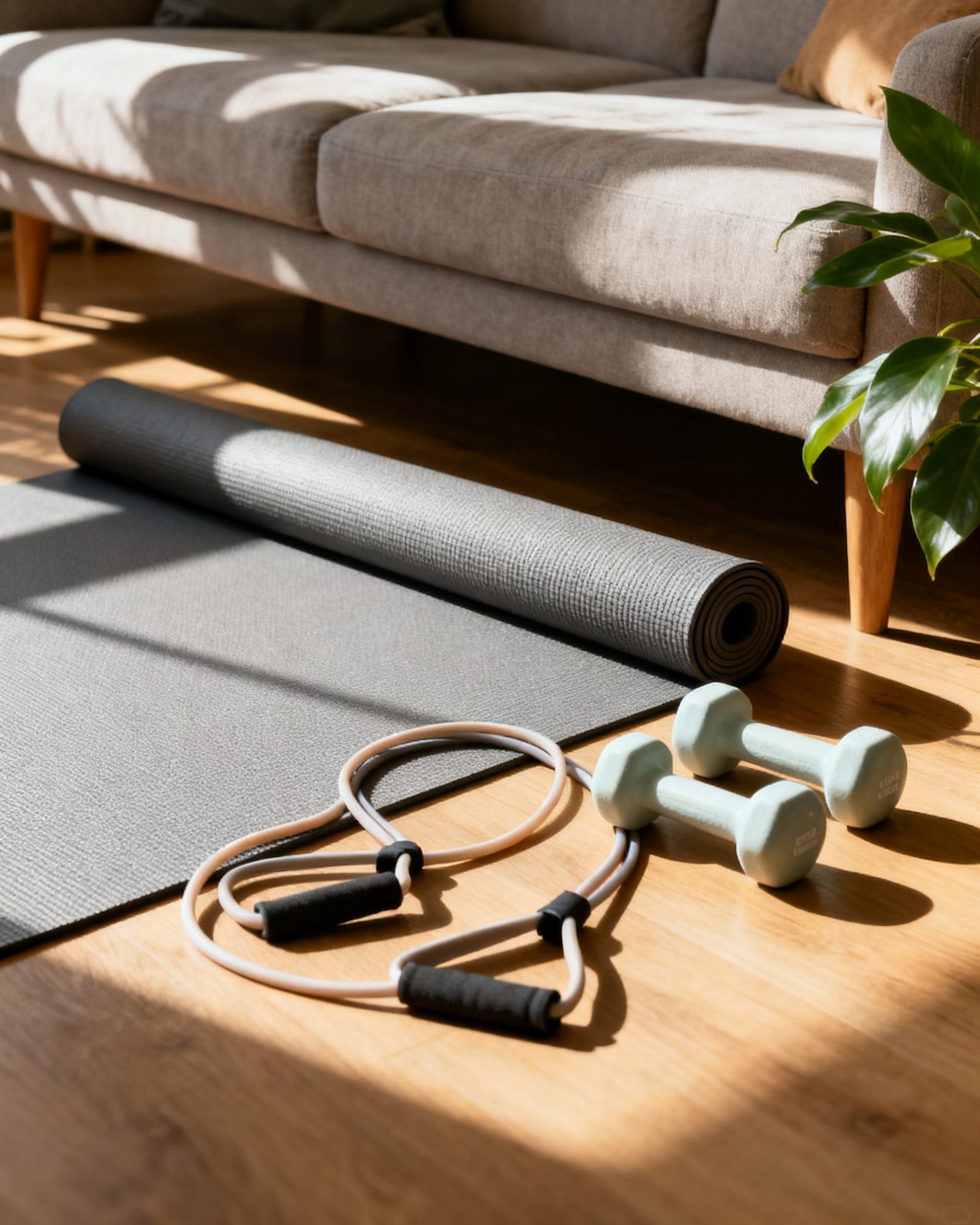
Rest is part of training, not a break from it. Muscles get stronger between sessions, not during them, so a home workout plan needs rest days built in. For most people, that means training each major muscle group on 2 to 3 days a week, with at least 48 hours between sessions for the same muscle group, and many people also keep one full rest day a week. How many rest days you need depends on how hard you train, how well you sleep and how new you are to exercise. Beginners often benefit from more.
Why rest days are part of the plan
When you exercise, you ask your muscles to do more than usual. The strength and fitness you gain happen afterwards, while you rest and sleep. Skip the rest and the next session feels harder, form slips and soreness lingers. The US Physical Activity Guidelines describe regular activity as one of the most important things people can do for their health, and recovery is what lets you keep doing it week after week.
A simple weekly pattern for home training looks like this:
| Day | What it can look like |
|---|---|
| Day 1 | Strength work for the whole body |
| Day 2 | Walk, gentle mobility or rest |
| Day 3 | Strength work for the whole body |
| Day 4 | Rest or easy movement |
| Day 5 | Strength work or a longer walk |
| Day 6 | Active recovery: easy walk, light stretching |
| Day 7 | Rest |
That is one example, not a rule. The point is that hard sessions for the same muscles are spaced out, and easy days are real days.
Muscle soreness after a workout: what DOMS is
Delayed onset muscle soreness, usually called DOMS, is the ache you feel after unfamiliar or harder exercise. It usually begins 12 to 24 hours after exercise, is often worst 24 to 72 hours afterwards, then eases. It is normal at first and lessens as the body adapts. It is not a sign you did something wrong, and it is not a measure of a good session.
DOMS is most common after:
- a new exercise, or a new version of one
- more repetitions or sets than usual
- slower, more controlled lowering of a weight
- a long gap since your last session
Gentle movement can help while you are sore: an easy walk, light stretching once the muscles are warm, or a few easy bodyweight squats. It is fine to train other muscle groups while one area is sore, as long as the sore area gets its 48 hours.
Soreness or pain? A table to check
Most soreness is a dull ache in the muscle belly that eases over a few days. Pain is different. Use this table to tell them apart.
| Normal soreness (DOMS) | Warning sign |
|---|---|
| Dull ache in the muscle, both sides similar | Sharp or sudden pain, or pain in a joint |
| Starts 12 to 24 hours after exercise, worst 24 to 72 hours later | Pain that starts during the exercise and does not settle |
| Eases with gentle movement and over a few days | Swelling, or pain that does not ease |
| You can still move the area through its normal range | You cannot put weight on it or lift your arm normally |
| Feels better after a walk or easy stretch | Comes with chest pain, dizziness or unusual breathlessness |
Sharp or sudden pain, pain in a joint, swelling, or pain that does not ease is not normal soreness: stop and talk to a doctor or physiotherapist. Stop exercising and seek medical help for chest pain or pressure, fainting, severe breathlessness or dizziness. If you are injured, pregnant or managing a health condition, ask your doctor before starting or changing exercise.
Active recovery: moving on your easy days
Active recovery means easy movement on the days between harder sessions. It is not a second workout. The aim is blood flow, gentle range of motion and a bit of feel-good movement.
Good options at home:
- an easy walk, at a pace where you can talk comfortably
- gentle mobility for hips, shoulders and spine
- light stretching after an easy walk, when muscles are warm
- a short session of easy bodyweight movement, such as glute bridges or slow squats
Stretching fits here. Hold a static stretch for 10 to 30 seconds to the point of mild tightness, never pain, and repeat each stretch 2 to 4 times. Stretching is most effective when the muscles are warm, so save the longer holds for after a walk or a warm-up. The guide to stretching for beginners walks through safe stretches for the whole body.
Active recovery is also a good time to notice how your body feels. If a muscle is still sore from the last session, keep the movement easy and give it another day.
Sleep: the recovery you cannot skip
The CDC advises adults aged 18 to 60 years to get 7 or more hours of sleep a night. Sleep is part of recovery, and short sleep can make hard sessions feel harder. A few habits that help:
- keep a consistent bedtime and wake time, including weekends
- keep the room dark, quiet and cool
- finish hard workouts a few hours before bed if they leave you wired
- wind down with a book or gentle stretching rather than a screen
If you are training at home in the evening, a cool-down of at least 5 to 10 minutes at light intensity helps you settle. Warm up for at least 5 to 10 minutes at light to moderate intensity before a session, and cool down for at least 5 to 10 minutes afterwards.
Signs you are doing too much
More is not always better. Watch for these signals and treat them as information, not failure:
- persistent tiredness that does not lift after a rest day
- performance falling: the same workout feels much harder for several sessions
- aches that do not ease, or soreness that lasts longer than usual
- poor sleep, low mood or feeling flat about training
- dreading every session
If several of these appear together, take an extra rest day, keep the next session easy, and check your sleep. If they persist, talk to your doctor. If you have a known heart, metabolic or kidney condition, or you are pregnant, injured or unsure, talk to a doctor before starting a new exercise programme.
Building rest into a home routine
Rest works best when it is planned, not improvised. A few practical habits:
- write rest days into the week alongside workouts
- keep one full rest day that involves no structured exercise
- alternate upper-body and lower-body focus if you train on consecutive days
- use a lighter week every few weeks rather than pushing through
- keep a simple note of how sessions feel, so you notice a trend before it becomes a problem
When you return after a rest day, progress gradually. The guide to progressive overload explains how to add a little difficulty at a time, and the guide to staying consistent covers how to keep going when motivation fades. Rest days are part of that consistency: they are what make the next session possible.
Common mistakes and myths about rest days
Myth: soreness means the workout worked. Soreness is a response to unfamiliar work, not a score. A session with no soreness can still build strength.
Myth: rest days undo progress. A planned rest day does not erase the work; it is part of how the body adapts to it.
Mistake: training the same muscles on back-to-back days. The same muscle group needs at least 48 hours between sessions. Split your week so each group gets that gap.
Mistake: filling every rest day with hard cardio. Easy movement is active recovery; hard sessions are training. Keep the easy days genuinely easy.
Mistake: stretching cold and hard before training. Warm up first, then stretch. Save long holds for after the session or for a separate mobility slot.
Mistake: pushing through pain. Soreness eases; pain does not. Sharp pain, joint pain, swelling or pain that does not ease means stop and get advice from a doctor or physiotherapist.
Mistake: ignoring sleep. Seven or more hours a night is part of the programme, not a luxury.
Rest is not the opposite of training. It is the other half of it. Plan the easy days, sleep well, and let soreness settle before you load the same muscles again.
Common questions
How many rest days a week do I need?
There is no single official number. Train each major muscle group on 2 to 3 days a week with at least 48 hours between sessions for the same group, and keep easy days between hard sessions. Many people also keep one full rest day a week. Beginners often benefit from more recovery, not less.
Is it normal to be sore after every workout?
No. Soreness is most common after new or harder exercise and usually eases as the body adapts. A session with no soreness can still build strength. If soreness lasts longer than usual or does not ease, take extra rest and talk to a doctor or physiotherapist if it continues.
What is DOMS and how long does it last?
DOMS is delayed onset muscle soreness, the ache after unfamiliar or harder exercise. It usually begins 12 to 24 hours after exercise, is often worst 24 to 72 hours afterwards, then eases. Gentle movement can help while it settles.
What counts as active recovery?
Easy movement on the days between harder sessions: a comfortable walk, gentle mobility, or light stretching once the muscles are warm. It is not a second workout. Keep it easy enough that you could hold a conversation.
How do I know if I am overtraining?
Watch for persistent tiredness that does not lift after a rest day, performance falling for several sessions, aches that do not ease, poor sleep or dreading every session. Take an extra rest day and keep the next session easy. If it continues, talk to your doctor.
Read next
Home Workouts for Beginners: No Gym Needed
Start home workouts for beginners with no equipment. Learn bodyweight moves, a sample session, safety tips, and how to progress at your own pace.
Home Workout Equipment: What's Worth Having
A plain guide to home workout equipment for beginners: which mat, bands, dumbbells and step are worth having, what each adds, and what to skip.
How to Stay Motivated to Exercise When Motivation Fades
Motivation fades, but habits last. Learn how to stay motivated to exercise with small starts, tracking what you do, and planning for bad weeks.