Progressive Overload: How to Keep Getting Stronger
Learn what progressive overload means, when to add weight, how double progression works, and how to break a strength plateau with simple, safe steps.
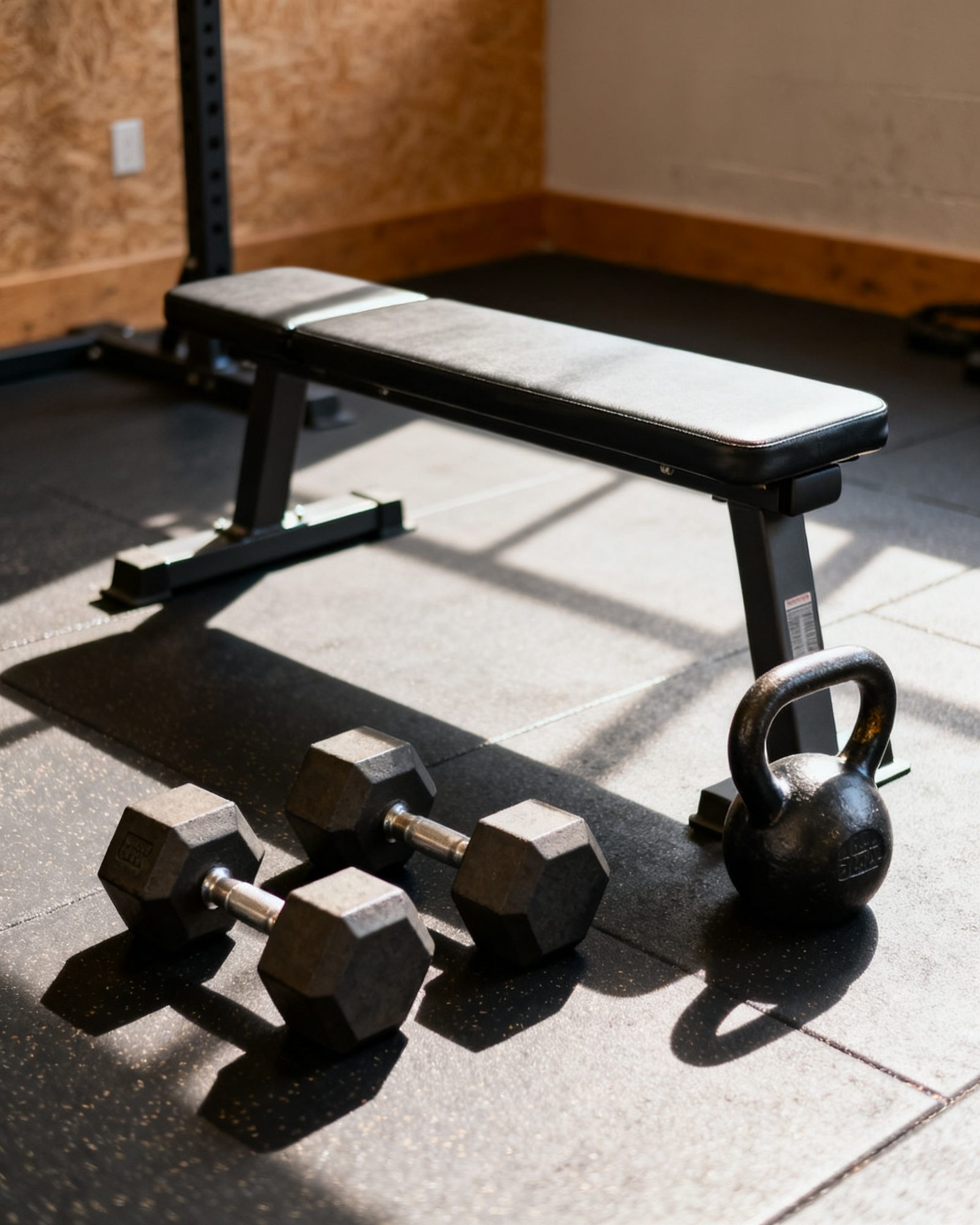
Progressive overload is the gradual increase of demand on your muscles over time. It is the reason a weight that felt heavy in your first week starts to feel manageable later. You do not need to change everything at once: you can add a little weight, do one or two more repetitions, add a set, improve your range of motion, slow the movement down, or train a little more often. The goal is to give your muscles a slightly bigger job than they are used to, then let them adapt. This guide explains how to apply progressive overload safely, when to increase weight, how double progression works, and what to do when progress stalls.
What progressive overload actually means
Your body adapts to the demands you place on it. If you always lift the same weight for the same number of repetitions, your muscles have no reason to get stronger. Progressive overload is the planned, gradual increase in that demand. It is not about adding weight every single session or pushing to failure. It is about making small, steady increases over weeks and months, while keeping good form.
The US Physical Activity Guidelines and ACSM both describe muscle-strengthening activities as important for adults. ACSM’s progression position stand suggests raising the load by about 2 to 10 percent once you can lift the current load for one or two repetitions more than your target on consecutive sessions. That is a small step: if you are lifting a weight that allows 10 repetitions, and you can now do 12 with good form in two sessions in a row, it is time to add a little weight.
The ways to progress (and how to choose)
Progressive overload is not only about adding weight. The table below shows the main ways to make an exercise harder, with notes on when each is useful.
| Method | What it looks like | Best for |
|---|---|---|
| Add load | Increase the weight by a small amount (about 2 to 10 percent) | When you can complete your target repetitions with good form and the last repetition feels manageable |
| Add repetitions | Do one or two more repetitions per set within the same weight | When you are not ready to add weight, or when you want to build a base |
| Add sets | Do one more set of an exercise | When you have been consistent and recovery is good |
| Improve range of motion | Move through a fuller, controlled range | When you have been shortening the movement or using momentum |
| Slow the tempo | Lower the weight more slowly, or pause at the bottom | When you want more control and muscle work without adding weight |
| Increase frequency | Train a muscle group more often, within recovery limits | When your weekly schedule allows and you are not sore |
For most beginners, adding repetitions and improving control come first. Adding weight is a later step. The strength training for beginners guide covers the basic lifts and how to learn them with a light load.
When to increase weight: the 2 to 10 percent rule
ACSM’s progression position stand suggests raising the load by about 2 to 10 percent once you can lift the current load for one or two repetitions more than your target on consecutive sessions. In practice, that means if your target is 10 repetitions and you can do 11 or 12 with good form in two sessions in a row, add a small amount of weight next time. For a lighter weight, a 2 percent increase is tiny; for a heavier weight, 10 percent is a bigger jump. When in doubt, take the smaller step.
A common mistake is adding weight too often. If you add weight every session, you will soon hit a wall, form will suffer, and you may get frustrated. Small, patient increases are more sustainable. The same ACSM guidance applies to all major muscle groups: legs, hips, back, abdomen, chest, shoulders and arms.
Double progression: a simple method for beginners
Double progression is a way to progress within a repetition range. You choose a range, for example 8 to 12 repetitions. You start with a weight that lets you do 8 repetitions with good form. Over the following sessions, you add a repetition per set whenever you can do so with good form, until you can do 12 repetitions with that same weight. Then you increase the weight slightly and go back to 8 repetitions. This method is easy to follow and works well with the ACSM recommendation of 8 to 12 repetitions per set for most adults, or 10 to 15 repetitions at a lighter effort for older or previously inactive people starting out.
Double progression gives you a clear target each session and prevents the guesswork of when to add weight. It also builds in patience: you are not chasing a new weight every time, just one more repetition.
Keeping a training log
A simple training log is one of the most useful tools for progressive overload. You do not need an app or a fancy notebook; a small paper log or a note on your phone works. Record the exercise, the weight, the sets, the repetitions, and how the set felt. This lets you see patterns: maybe you always struggle on the third set, or maybe you are ready to add weight on one exercise but not another. Without a log, it is easy to repeat the same session for weeks without realising you are ready to progress.
A log also helps you spot a plateau early and adjust. It can be as simple as: date, exercise, weight, sets x reps, notes.
Deloads, rest and why progress is not linear
Progress is rarely a straight line. Some weeks you feel strong, other weeks you feel tired. That is normal. Recovery is part of training: the session is the demand, and the rest days that follow give the body time to adapt to it. ACSM recommends at least 48 hours between sessions for the same muscle group, and adults need 7 or more hours of sleep a night (CDC). If you are consistently sore, tired, or your performance drops, a deload week (lighter weights or fewer sets) can help you come back stronger. The rest and recovery guide explains soreness, sleep and listening to your body.
Plateaus are normal. If you have not progressed for a few weeks, check the basics: are you sleeping enough and taking rest days? Are you using good form? Sometimes a small change, like adding a rest day or reducing the number of exercises, is enough to get moving again. Progress is slower and more uneven than many people expect, especially after the first few months.
A sample week of progression
The beginner strength workout plan gives sample weekly schedules. A simple progression over a few weeks might look like this for one exercise:
- Week 1: 3 sets of 8 repetitions with a light weight.
- Week 2: 3 sets of 9 repetitions with the same weight.
- Week 3: 3 sets of 10 repetitions with the same weight.
- Week 4: 3 sets of 11 repetitions with the same weight.
- Week 5: 3 sets of 12 repetitions with the same weight.
- Week 6: increase the weight by about 2 to 10 percent and return to 8 repetitions.
This is double progression in action. It works for most exercises, whether you use machines, free weights, resistance bands or bodyweight.
What goes wrong: common mistakes and warning signs
Adding weight too quickly. If you add weight every session, form breaks down and you may get stuck or injured. Use the 2 to 10 percent rule and only add weight when you can do the target repetitions with good form in two sessions in a row.
Chasing soreness. Soreness is not a measure of a good workout. Delayed onset muscle soreness (DOMS) usually begins 12 to 24 hours after exercise and is often worst 24 to 72 hours afterwards, then eases. Gentle movement can help. Sharp or sudden pain, pain in a joint, swelling, or pain that does not ease is not normal soreness: stop and talk to a doctor or physiotherapist.
Ignoring form. Correct form and a full, controlled range of motion come first. If you cannot complete the movement with good form, reduce the weight or the repetitions. Ego lifting is a fast track to a plateau or an injury.
Skipping rest. Muscles need at least 48 hours between sessions for the same muscle group. Too little rest can leave you tired and stall your progress.
Holding your breath. Breathe out during the effort and in during the return. Do not hold your breath while lifting.
Expecting linear progress. Progress slows down and becomes more uneven over time. That is normal. If you have a strength plateau, review your sleep, stress and recovery before changing your programme.
Warning signs. Stop exercising and seek medical help for chest pain or pressure, fainting, severe breathlessness or dizziness. If you have a known heart, metabolic or kidney condition, or you are pregnant, injured or unsure, talk to your doctor before starting or changing an exercise programme.
Progressive overload is a long-term habit, not a race. Start with a light load, learn the movement, and add a little difficulty when you are ready. Small steps, repeated consistently, are what build strength.
Common questions
How often should I increase weight?
Increase weight when you can complete one or two more repetitions than your target with good form in two sessions in a row. ACSM suggests raising the load by about 2 to 10 percent at that point. How often that happens varies from person to person and from exercise to exercise.
What is double progression?
Double progression means working within a repetition range, such as 8 to 12. You start at the bottom of the range and add a repetition per set whenever you can do so with good form until you reach the top, then increase the weight slightly and start again at the bottom. It is a simple way to apply progressive overload.
Why have I stopped getting stronger?
A strength plateau is common. Check your sleep, rest days and stress. Are you using good form? Sometimes a lighter week or a small change in your programme helps. Progress naturally slows over time, and plateaus are not a sign of failure.
Can I progress without adding weight?
Yes. You can add repetitions, add sets, improve your range of motion, slow the movement down, or train a little more often. These are all forms of progressive overload. Adding weight is just one option.
How do I know if I am ready to add weight?
If you can complete your target repetitions with good form and the last repetition feels manageable, and you have done so in two sessions in a row, you are ready for a small increase. If form breaks down or you feel pain, stay at the current weight.
Read next
Beginner Weekly Workout Plan: 2-Day and 3-Day Strength Schedules
A sample beginner weekly workout plan with 2-day and 3-day full-body strength schedules, sets, reps, rest, warm-up and how to progress safely.
Free Weights vs Machines: Which Should a Beginner Use?
Free weights vs machines for beginners: compare learning curve, safety, stability and results. Learn how to combine both, use a spotter and avoid common mistakes.
Proper Lifting Form: Squat, Hinge, Push and Pull
Learn proper lifting form for squats, hip hinges, pushes and pulls. Plain cues, breathing, common faults and fixes, and when to lower the weight or ask a doctor.