Beginner Weekly Workout Plan: 2-Day and 3-Day Strength Schedules
A sample beginner weekly workout plan with 2-day and 3-day full-body strength schedules, sets, reps, rest, warm-up and how to progress safely.
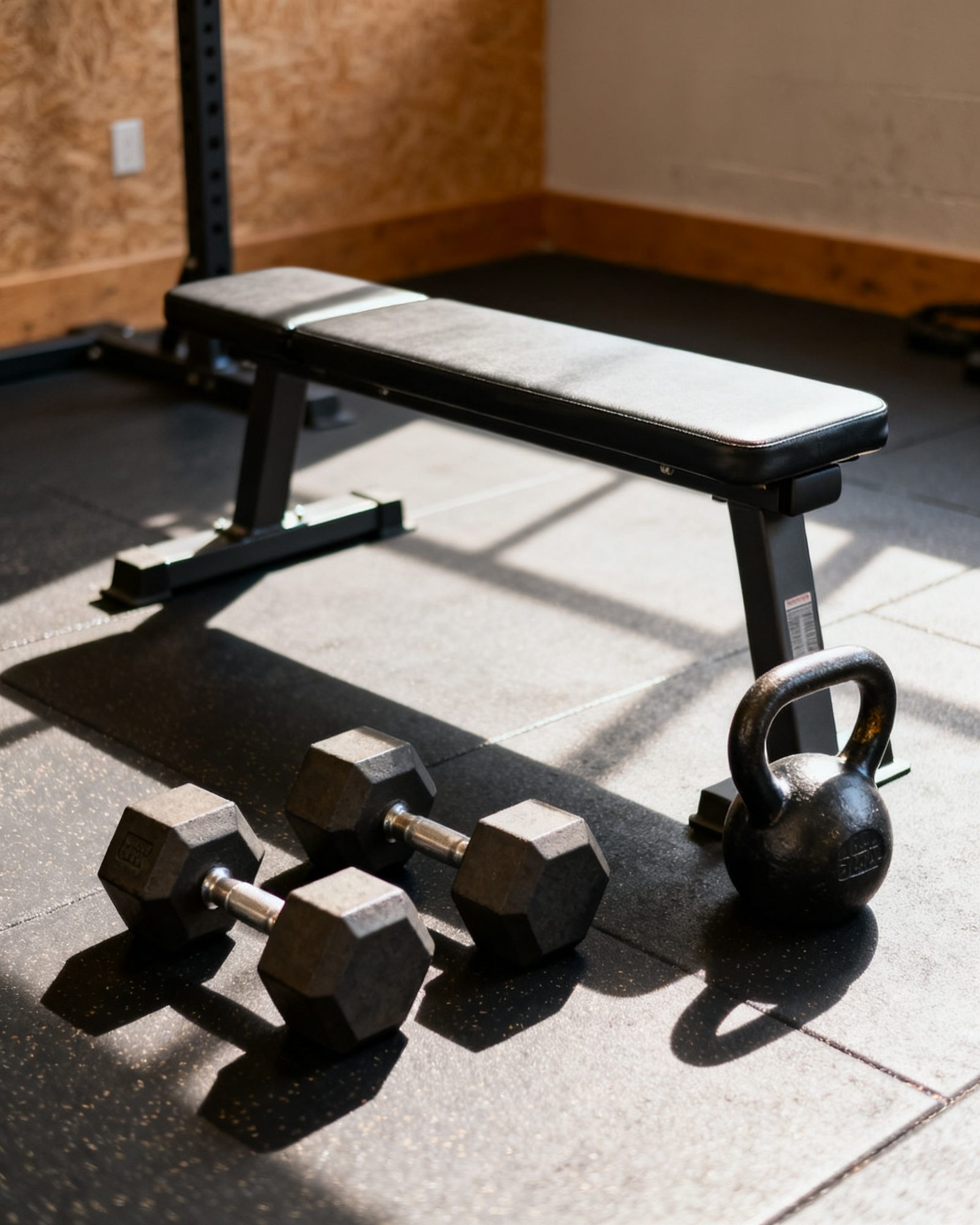
A beginner weekly workout plan for strength training is simple: do full-body sessions on 2 or 3 days a week, leave at least 48 hours between sessions that work the same muscle group, and use 2 to 4 sets of 8 to 12 repetitions for most exercises. Add moderate aerobic activity on the other days until you reach the weekly activity totals. Start lighter than you think you need, learn the movements, and increase gradually.
What a beginner strength week looks like
The US Physical Activity Guidelines and the CDC recommend muscle-strengthening activities that work all the major muscle groups on 2 or more days a week. The major muscle groups are the legs, hips, back, abdomen, chest, shoulders and arms. ACSM adds that 2 to 3 days a week per muscle group works well, with at least 48 hours between sessions for the same muscle group.
A full-body session hits all the major muscle groups in one go, so 2 or 3 sessions a week is enough to start. That leaves the other days for walking, swimming, cycling or a class. The weekly aerobic target is at least 150 to 300 minutes of moderate-intensity activity, or 75 to 150 minutes of vigorous activity, or a mix. One way to reach 150 minutes is 30 minutes a day, 5 days a week. The plain-language guide to how much exercise you need explains the totals and how short bouts count.
Before the first session
If you have a known heart, metabolic or kidney condition, are pregnant or postpartum, are injured, have pain, or are unsure whether exercise is safe for you, talk to your doctor before starting. This page gives no programme for those situations. Stop and get medical advice for chest pain or pressure, fainting, severe breathlessness or dizziness.
The warm-up and cool-down
Warm up for at least 5 to 10 minutes at light to moderate intensity before a strength session, and cool down for at least 5 to 10 minutes afterwards. A warm-up can be brisk walking, easy cycling or dynamic movements such as arm circles, leg swings and bodyweight squats. The cool-down can be easy movement followed by static stretches for the muscles you used. The warm-up and cool-down guide has a fuller routine.
Two-day full-body plan
Use this schedule if you are new to strength training or short on time. Train on two non-consecutive days, for example Tuesday and Friday, so each muscle group gets at least 48 hours between sessions.
| Day | Session | What to do |
|---|---|---|
| Day 1 | Full-body strength | Warm-up, then the exercises below, then cool-down |
| Day 2 | Moderate aerobic activity | 30 minutes of brisk walking, water aerobics or steady cycling |
| Day 3 | Rest or light movement | Easy walk or gentle mobility |
| Day 4 | Full-body strength | Same session as Day 1 |
| Day 5 | Moderate aerobic activity | 30 minutes of moderate activity |
| Day 6 | Rest or light movement | Easy walk or gentle mobility |
| Day 7 | Rest | — |
The two-day session
Do 2 to 4 sets of each exercise, 8 to 12 repetitions per set, and rest about 2 to 3 minutes between sets. Beginners and older adults can start with 10 to 15 repetitions at a lighter effort. A single set of each exercise can be effective for beginners, so start with fewer sets and add more as you adapt.
| Order | Exercise | Sets | Repetitions | Rest between sets |
|---|---|---|---|---|
| 1 | Squat (bodyweight or light dumbbell) | 2 to 4 | 8 to 12 | 2 to 3 minutes |
| 2 | Push-up (wall, knees or full) | 2 to 4 | 8 to 12 | 2 to 3 minutes |
| 3 | Row (dumbbell, band or machine) | 2 to 4 | 8 to 12 | 2 to 3 minutes |
| 4 | Glute bridge | 2 to 4 | 8 to 12 | 2 to 3 minutes |
| 5 | Shoulder press (light dumbbells) | 2 to 4 | 8 to 12 | 2 to 3 minutes |
| 6 | Plank or dead bug | 2 to 4 | 8 to 12 per side (dead bug); a short, steady hold (plank) | 2 to 3 minutes |
Three-day full-body plan
Use this schedule if you have a little more time and want more practice. Train on three non-consecutive days, for example Monday, Wednesday and Friday, so each muscle group gets at least 48 hours between sessions.
| Day | Session | What to do |
|---|---|---|
| Day 1 | Full-body strength | Warm-up, then the exercises below, then cool-down |
| Day 2 | Moderate aerobic activity | 30 minutes of moderate activity |
| Day 3 | Full-body strength | Same session as Day 1 |
| Day 4 | Rest or light movement | Easy walk or gentle mobility |
| Day 5 | Full-body strength | Same session as Day 1 |
| Day 6 | Moderate aerobic activity | 30 minutes of moderate activity |
| Day 7 | Rest | — |
The three-day session
Use the same exercise order and the same sets, repetitions and rest as the two-day session. If three full sessions feel like too much at first, start with two and add the third after a few weeks. The weekly aerobic total still applies: build toward 150 to 300 minutes of moderate activity across the week.
How to choose the weight and learn the movement
Learn each movement with a light load before adding weight. Correct form and a full, controlled range of motion come first. A weight that lets you complete the target repetitions with good form is the right weight for now. If you cannot complete the repetitions with control, use less weight or an easier version. If you can do more than the target easily on consecutive sessions, you are ready to progress.
Breathe out during the effort and in during the return. Do not hold your breath while lifting.
Swapping exercises
You can build the same session with machines, dumbbells, resistance bands or bodyweight. The strength training for beginners guide covers the main options and how to use them.
| Pattern | Machine option | Dumbbell option | Bodyweight option |
|---|---|---|---|
| Squat | Leg press | Goblet squat | Bodyweight squat |
| Push | Chest press | Dumbbell bench press | Push-up (wall, knees or full) |
| Pull | Seated row | One-arm dumbbell row | Band row |
| Hinge | Back extension | Romanian deadlift with light dumbbells | Glute bridge |
| Press | Shoulder press machine | Seated dumbbell press | Pike push-up (advanced) |
| Core | — | — | Plank or dead bug |
How to progress after the first weeks
Progressive overload means gradually increasing the demand on the muscles over time. ACSM suggests raising the load by about 2 to 10 percent once you can lift the current load for one or two repetitions more than your target on consecutive sessions. In practice, add a small amount of weight, add a repetition, or add a set, one change at a time. The progressive overload guide explains how to apply it without rushing.
In the first weeks, expect some muscle soreness. Delayed onset muscle soreness usually begins 12 to 24 hours after exercise and is often worst 24 to 72 hours afterwards, then eases. Gentle movement can help. Sharp or sudden pain, pain in a joint, swelling, or pain that does not ease is not normal soreness: stop and talk to a doctor or physiotherapist.
Where cardio and the weekly totals fit
Strength sessions count toward the muscle-strengthening guideline, not the aerobic total. Add moderate aerobic activity on the other days: brisk walking at 2.5 mph or faster, water aerobics, cycling slower than 10 mph on level ground, ballroom dancing or general gardening all count as moderate. Swimming laps, jogging and aerobic dancing count as vigorous. The talk test is a simple check: at moderate intensity you can talk but not sing; at vigorous intensity you cannot say more than a few words without pausing for a breath.
Aim to spread activity over 4 to 5 days a week or every day, and reduce time spent sitting. Some activity is better than none, and activity of any length counts toward the weekly total.
What goes wrong, and how to avoid it
- Starting too heavy. Use a light load to learn the movement. Add weight only when the target repetitions feel controlled.
- Skipping the warm-up. Warm up for at least 5 to 10 minutes at light to moderate intensity before lifting.
- Training the same muscles on back-to-back days. Leave at least 48 hours between sessions for the same muscle group.
- Holding the breath. Breathe out during the effort and in during the return.
- Doing too much too soon. Start below your limit and increase gradually over weeks and months.
- Ignoring pain. Sharp or sudden pain, joint pain, swelling or pain that does not ease means stop and get advice.
- Believing you need a gym. Bodyweight, bands and a pair of light dumbbells are enough to start.
- Comparing yourself to others. The same activity can be moderate for one person and vigorous for another; use your own effort as the guide.
If you are pregnant or postpartum, talk to your doctor or midwife about how much and what kinds of activity are right for you before starting or changing a programme.
Common questions
How many days a week should a beginner strength train?
Start with 2 full-body sessions a week and add a third when you feel ready. Leave at least 48 hours between sessions that work the same muscle group. The US Physical Activity Guidelines recommend muscle-strengthening activity on 2 or more days a week.
How many sets and reps should a beginner do?
For most adults, 2 to 4 sets of 8 to 12 repetitions per exercise improve strength. Beginners and older adults can start with 10 to 15 repetitions at a lighter effort, and a single set of each exercise can be effective when starting out. Rest about 2 to 3 minutes between sets.
Can I do cardio on the same day as strength training?
Yes. Many people warm up with a few minutes of easy cardio before lifting. If the cardio is long or hard, many people prefer to lift first so they are fresh enough to keep good form, and you can count moderate aerobic activity toward the weekly total of 150 to 300 minutes.
How do I know when to add weight?
When you can lift the current load for one or two repetitions more than your target on consecutive sessions, you are ready to progress. Raise the load by about 2 to 10 percent, or add a repetition or a set, one change at a time.
Is it safe to strength train if I am pregnant or have a health condition?
Talk to your doctor before starting or changing exercise if you are pregnant, postpartum, injured, in pain, or have a heart, metabolic or kidney condition. This page gives no programme for those situations. Stop and get medical advice for chest pain, fainting, severe breathlessness or dizziness.
Read next
Free Weights vs Machines: Which Should a Beginner Use?
Free weights vs machines for beginners: compare learning curve, safety, stability and results. Learn how to combine both, use a spotter and avoid common mistakes.
Proper Lifting Form: Squat, Hinge, Push and Pull
Learn proper lifting form for squats, hip hinges, pushes and pulls. Plain cues, breathing, common faults and fixes, and when to lower the weight or ask a doctor.
Progressive Overload: How to Keep Getting Stronger
Learn what progressive overload means, when to add weight, how double progression works, and how to break a strength plateau with simple, safe steps.