Home Workouts for Beginners: No Gym Needed
Start home workouts for beginners with no equipment. Learn bodyweight moves, a sample session, safety tips, and how to progress at your own pace.
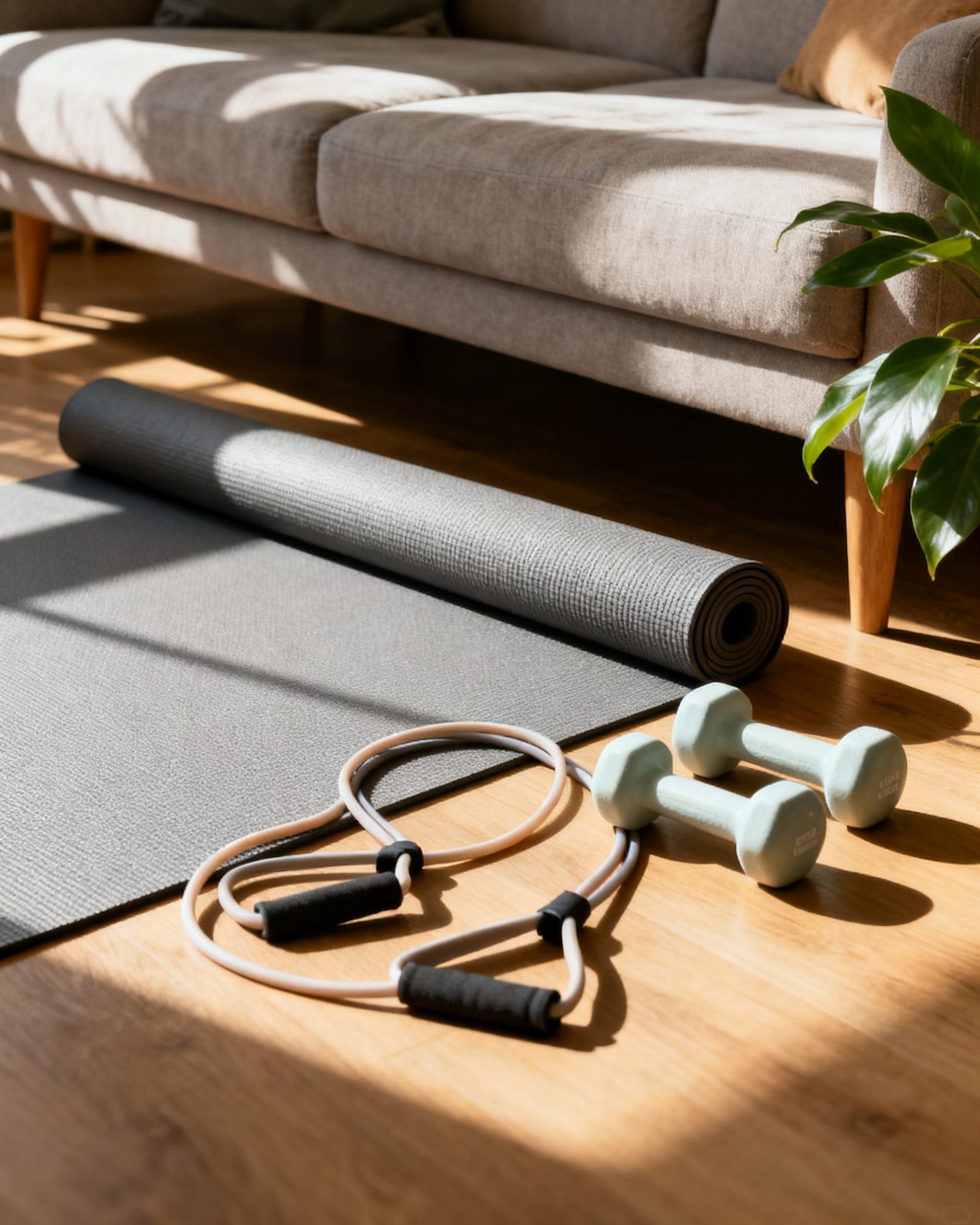
You can get a complete beginner workout at home with nothing more than a little floor space and your own body weight. Bodyweight exercises like squats, glute bridges, wall push-ups, lunges, planks and bird dogs work the major muscle groups, and they count toward the muscle-strengthening activity the US Physical Activity Guidelines recommend on 2 or more days a week. No gym, no equipment, no problem.
Why home workouts count
The US Physical Activity Guidelines for Americans, 2nd edition (2018), say adults should do muscle-strengthening activities that work all major muscle groups on 2 or more days a week. The major muscle groups are the legs, hips, back, abdomen, chest, shoulders and arms. Bodyweight exercises at home can cover all of them. The guidelines also dropped the old rule that activity had to last at least 10 minutes; activity of any length counts toward your weekly total. A short session before breakfast or between chores is real exercise.
Home workouts also make it easier to start below your limit and build up gradually, which is exactly what the guidelines recommend for people who are new to exercise. You can stop when you need to, repeat a session you liked, and skip the pressure of a crowded room.
The beginner bodyweight moves
These six moves form a simple, balanced routine. Each one has an easier version and a harder version, so you can choose the level that feels right today.
| Move | What it works | Easier version | Harder version |
|---|---|---|---|
| Squat | Legs, hips | Sit back to a chair, stand up | Slow down, add a pause at the bottom |
| Glute bridge | Hips, back of the legs | Small lift off the floor | Lift higher, hold for a moment at the top |
| Push-up | Chest, shoulders, arms | Wall push-up or knees on the floor | Full push-up from the toes |
| Lunge | Legs, hips | Hold a chair for balance, small step | Step further, lower slowly |
| Plank | Abdomen, back | Knees on the floor, shorter hold | Longer hold, or lift one foot |
| Bird dog | Back, abdomen | Move only the arm or only the leg | Move opposite arm and leg together |
For each move, aim for 8 to 12 repetitions per set, which ACSM says improves strength in most adults. If you are older or have been inactive, 10 to 15 repetitions at a lighter effort may suit you better. A single set of each exercise can be effective, especially for beginners. Rest about 2 to 3 minutes between sets.
A sample home session
Warm up for at least 5 to 10 minutes at light to moderate intensity. March in place, swing your arms, do a few gentle squats and step side to side. A longer warm-up routine is described in how to warm up and cool down before and after exercise.
Then do one set of each move in the table, in order, with a short rest between moves. That is a complete beginner session. As you get comfortable, add a second set of each move, resting about 2 to 3 minutes between sets. Finish with a cool-down of at least 5 to 10 minutes: walk around, then stretch the muscles you used, holding each stretch for 10 to 30 seconds to the point of mild tightness, never pain. Repeat each stretch 2 to 4 times.
Do this session on 2 or 3 days a week, with at least 48 hours between sessions for the same muscle group. On other days, walk or do other moderate activity. A sample weekly schedule that mixes home strength work with aerobic activity is in the beginner strength workout plan.
Space, safety and what you need
You need enough room to lie down with your arms overhead and to step forward and back without hitting furniture. A clear patch of floor about the size of a yoga mat is enough. Check that the floor is not slippery, and keep pets and small children out of the way while you move.
You do not need equipment to start. A sturdy chair is useful for squats and balance. Later, a mat, a resistance band or a pair of light dumbbells can add variety; basic home workout equipment: what is worth having explains what is useful and what can wait.
Breathe out during the effort and in during the return, and do not hold your breath while lifting. Stop and get medical advice for chest pain or pressure, fainting, severe breathlessness or dizziness. If you have a known heart, metabolic or kidney condition, are pregnant, injured or unsure, talk to your doctor before starting a new exercise programme.
Following online classes at home
Online classes can be a good way to learn moves and stay motivated. Choose a beginner class and watch a minute of it before you start, so you know what is coming. Keep water nearby, clear your space, and pause whenever you need to. You do not have to match the instructor rep for rep; take every move at your own level. If a class moves too fast, repeat it another day or choose a slower one. Look for classes labeled beginner, and check that the instructor shows easier versions of the moves.
How to make it easier or harder
Make a move easier by reducing the range of motion, using a chair for support, or doing fewer repetitions. Make it harder by slowing down, adding a pause, or increasing the number of repetitions gradually. If you use weights, ACSM’s progression position stand suggests raising the load by about 2 to 10 percent once you can lift the current load for one or two repetitions more than your target on consecutive sessions. With bodyweight alone, progress might mean moving from a wall push-up to a knee push-up, or from a knee push-up to a full one.
What goes wrong
- Doing too much too soon. Soreness after unfamiliar exercise is normal; it usually begins 12 to 24 hours later and is often worst 24 to 72 hours afterwards, then eases. Sharp or sudden pain, pain in a joint, swelling, or pain that does not ease is not normal soreness: stop and talk to a doctor or physiotherapist.
- Skipping the warm-up. Cold muscles are less ready to move. Spend at least 5 to 10 minutes warming up.
- Holding your breath. Breathe steadily through each move.
- Comparing yourself to the instructor. Online classes are demonstrations, not competitions. Use the easier version whenever you need it.
- Training the same muscles every day. Leave at least 48 hours between strength sessions for the same muscle group.
- Expecting instant progress. The guidelines describe benefits in general terms: feeling better, sleeping better and improved physical function over time. Consistency matters more than intensity.
Rest, sleep and staying consistent
Recovery is part of the programme. Adults aged 18 to 60 need 7 or more hours of sleep a night, according to the CDC. Gentle movement on rest days, such as a walk or a stretch, can help sore muscles feel better.
Staying consistent is easier when the workout is short and scheduled. Put it in your calendar, keep your space clear, and have a backup plan for busy days, such as one set of each move instead of two. How to stay consistent with exercise when motivation fades has more practical ideas. Some physical activity is better than none, and activity of any length counts.
Common questions
Can I get a good workout at home with no equipment?
Yes. Bodyweight exercises such as squats, glute bridges, push-ups, lunges, planks and bird dogs work the major muscle groups. The US Physical Activity Guidelines recommend muscle-strengthening activity on 2 or more days a week, and bodyweight moves count toward that.
How many days a week should a beginner do home workouts?
Aim for 2 or 3 strength sessions a week, with at least 48 hours between sessions for the same muscle group. On other days, walk or do other moderate activity. The guidelines recommend at least 150 to 300 minutes a week of moderate aerobic activity in total.
How many sets and reps should a beginner do?
For most adults, 8 to 12 repetitions per set improve strength. A single set of each exercise can be effective for beginners. Rest about 2 to 3 minutes between sets, and add sets gradually as you get comfortable.
What should I do if I am sore after my first home workout?
Delayed onset muscle soreness usually begins 12 to 24 hours after exercise and is often worst 24 to 72 hours afterwards, then eases. Gentle movement can help. Sharp or sudden pain, joint pain, swelling, or pain that does not ease is not normal soreness: stop and talk to a doctor or physiotherapist.
Do I need to warm up before a home workout?
Yes. Warm up for at least 5 to 10 minutes at light to moderate intensity, and cool down for at least 5 to 10 minutes afterwards. Stretching is most effective when the muscles are warm.
Read next
Home Workout Equipment: What's Worth Having
A plain guide to home workout equipment for beginners: which mat, bands, dumbbells and step are worth having, what each adds, and what to skip.
Rest Days and Recovery: Soreness, Sleep and Listening to Your Body
How many rest days you need, what muscle soreness after a workout means, how DOMS works, and how sleep and active recovery help you train at home.
How to Stay Motivated to Exercise When Motivation Fades
Motivation fades, but habits last. Learn how to stay motivated to exercise with small starts, tracking what you do, and planning for bad weeks.