First Time at the Gym: A Calm Beginner's Plan for Week One
A calm, step-by-step plan for your first week at the gym: the tour, a simple first workout, how many visits, what soreness is normal, and when to ask for help.
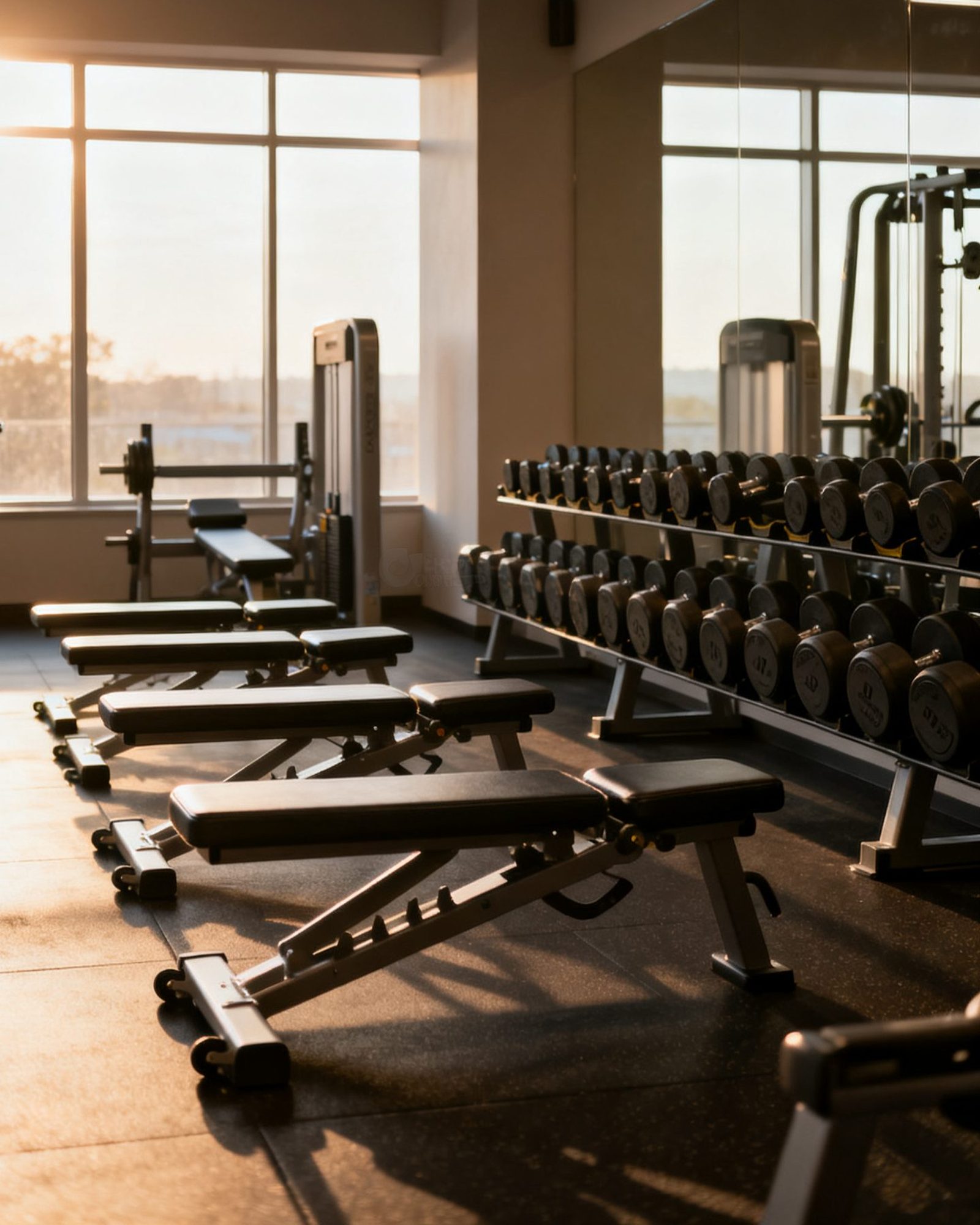
Walking into a gym for the first time is mostly a question of knowing what happens next. The first week is not about training hard. It is about learning the layout, trying a few machines or bodyweight moves with easy effort, and getting comfortable enough to come back. Two or three short visits are plenty, and the plan below keeps each one simple.
Before the first visit: the tour and the induction
Most gyms offer a tour or a short induction with a staff member before you start. Take it. You will see where the changing rooms, lockers, water fountain and exits are, and you can ask which areas are for free weights, which are for machines, and where the cardio equipment sits. Ask how the machines switch on, whether there are wipes for cleaning equipment, and what the busy times are. If you feel nervous about walking in, it helps to read about gym anxiety and how to feel at ease as a beginner before you go.
Bring a water bottle, a towel, comfortable clothes and shoes you can move in, and something to secure your things. A short checklist of what to bring to the gym can save a first-day scramble.
Your first session: warm-up, a few moves, easy cardio, cool-down
A first workout does not need to be long or complicated. The aim is to finish feeling as though you could have done a little more.
- Warm up for at least 5 to 10 minutes at light to moderate intensity. A brisk walk on a treadmill, an easy ride on a stationary bike or a few minutes on an elliptical will do. You should be breathing faster but still able to talk.
- Try two or three machines or bodyweight moves. Pick machines that work large muscle groups, such as a leg press, a chest press and a seated row, or use bodyweight squats, wall push-ups and glute bridges. Use a light load and do one set of 10 to 15 repetitions, learning the movement before adding weight. If you are unsure how a machine works, ask a staff member or read how to use gym machines.
- Finish with easy cardio for a few minutes if you have energy left, or stop there.
- Cool down for at least 5 to 10 minutes. Walk slowly, then stretch the muscles you used, holding each stretch for 10 to 30 seconds to mild tightness, never pain.
That is a complete first session. It may take less time than you expect, and that is fine.
How many visits in the first week
Two or three visits in the first week is a sensible start. Leave at least one rest day between strength sessions, and keep each session short. The US Physical Activity Guidelines note that some activity is better than none, and that activity of any length counts toward the weekly total, so even a short visit is worthwhile.
A sample first week might look like this:
| Day | What to do | How long |
|---|---|---|
| Day 1 | Tour or induction, then a short first session: warm-up, two or three machines or bodyweight moves, cool-down | Warm-up 5 to 10 minutes; cool-down 5 to 10 minutes; a few easy sets in between |
| Day 2 | Rest or a gentle walk | — |
| Day 3 | Cardio at a light-to-moderate effort (you can still talk), such as a brisk walk or stationary bike, plus stretching | Warm-up and cool-down 5 to 10 minutes each; easy cardio in between |
| Day 4 | Rest | — |
| Day 5 | Repeat the first session, adding one set to each move if it felt easy | Warm-up and cool-down 5 to 10 minutes each |
| Day 6 and 7 | Rest, a walk, or another easy cardio session if you feel like it | — |
Once the first week feels manageable, a beginner strength workout plan can help you build a weekly routine with strength work on 2 or more days a week.
What soreness is normal after the first sessions
Feeling stiff or sore a day or two after unfamiliar exercise is common. This is delayed onset muscle soreness, or DOMS. It usually begins 12 to 24 hours after exercise, is often worst 24 to 72 hours afterwards, and then eases. Gentle movement, such as an easy walk, can help. Soreness is normal at first and lessens as the body adapts.
Sharp or sudden pain, pain in a joint, swelling, or pain that does not ease is not normal soreness. Stop and talk to a doctor or physiotherapist.
Quiet times, asking for help, and gym etiquette
If the gym feels crowded, ask staff when it is quietest and plan your first visits for those times. Staff are there to help with machines, settings and questions; asking is part of using the gym well. A few small habits make the weights floor easier for everyone: wipe equipment after use, put weights back, and share machines by asking to work in. More of these unwritten rules are in gym etiquette for beginners.
When to talk to a doctor first
Talk to your doctor before starting a new exercise programme if you have a known heart, metabolic or kidney condition, if you have symptoms such as chest pain, unusual breathlessness or dizziness, or if you are pregnant, injured or unsure. Questionnaires such as the PAR-Q+ can help you decide whether to check first. Stop exercising and seek medical help for chest pain or pressure, fainting, severe breathlessness or dizziness.
What goes wrong in the first week, and how to avoid it
- Doing too much too soon. A first week of long, hard sessions often leads to heavy soreness and a loss of motivation. Start below your limit and increase gradually over weeks and months.
- Skipping the warm-up or cool-down. Both take at least 5 to 10 minutes and make the session feel better. They are part of the workout, not an optional extra.
- Adding weight before learning the movement. Correct form and a full, controlled range of motion come first. Learn each exercise with a light load, then add weight gradually.
- Holding your breath while lifting. Breathe out during the effort and in as you return.
- Believing you must “feel the burn” every time. Moderate effort is enough to build fitness. You should be able to talk, though not sing, during moderate activity.
- Comparing yourself to regulars. Most people in a gym are focused on their own session. Your first week is for learning the layout and the machines, not for matching anyone else.
- Ignoring pain. Soreness is normal; sharp pain is not. Stop and get advice if something hurts sharply or does not settle.
A calm plan for the rest of the month
After the first week, keep the same shape: warm up, do a few strength moves, add a little easy cardio, cool down. Aim to build toward the adult guideline of at least 150 to 300 minutes a week of moderate-intensity aerobic activity and muscle-strengthening work on 2 or more days a week, but do it over weeks, not days. If you can, book a session with a personal trainer to check your form; in the US personal trainers are not licensed by the state, so ask about a current certification from an accredited organisation and about first aid and CPR training. The first week is simply about showing up, learning a little, and leaving feeling that you could come back.
Common questions
What should I do on my first day at the gym?
Start with the tour or induction if it is offered. Then do a short session: warm up for at least 5 to 10 minutes at light to moderate intensity, try two or three machines or bodyweight moves with a light load, and cool down for at least 5 to 10 minutes. Finish feeling as though you could have done a little more.
How many times a week should a beginner go to the gym?
Two or three short visits in the first week is a good start. Leave at least one rest day between strength sessions. As the first week feels easier, you can build toward the adult guideline of muscle-strengthening work on 2 or more days a week and at least 150 to 300 minutes a week of moderate aerobic activity.
Is it normal to be sore after my first gym session?
Yes. Delayed onset muscle soreness usually begins 12 to 24 hours after unfamiliar exercise, is often worst 24 to 72 hours afterwards, and then eases. Gentle movement can help. Sharp or sudden pain, joint pain, swelling, or pain that does not ease is not normal soreness—stop and talk to a doctor or physiotherapist.
What should I bring to the gym for the first time?
Bring a water bottle, a towel, comfortable clothes and shoes you can move in, and something to secure your things. A locker padlock is often useful. A short checklist helps you avoid a first-day scramble.
When should I talk to a doctor before starting at the gym?
Talk to your doctor before starting a new exercise programme if you have a known heart, metabolic or kidney condition, if you have symptoms such as chest pain, unusual breathlessness or dizziness, or if you are pregnant, injured or unsure. Stop exercising and seek medical help for chest pain or pressure, fainting, severe breathlessness or dizziness.
Read next
How to Choose a Gym: What to Check Before You Join
A practical guide to choosing a gym: what to check on a tour, questions to ask, how to read a membership contract, and how to compare gym types without pressure.
Gym Anxiety: How to Feel at Ease as a Beginner
Nervous about the gym? Practical ways to feel calmer as a beginner: quieter times, a simple plan, inductions, headphones, and what to do if anxiety feels heavy.
Gym Etiquette for Beginners: The Unwritten Rules
New to the gym? Learn the unwritten rules of gym etiquette, from wiping equipment to sharing machines, so you feel confident and respectful on every visit.